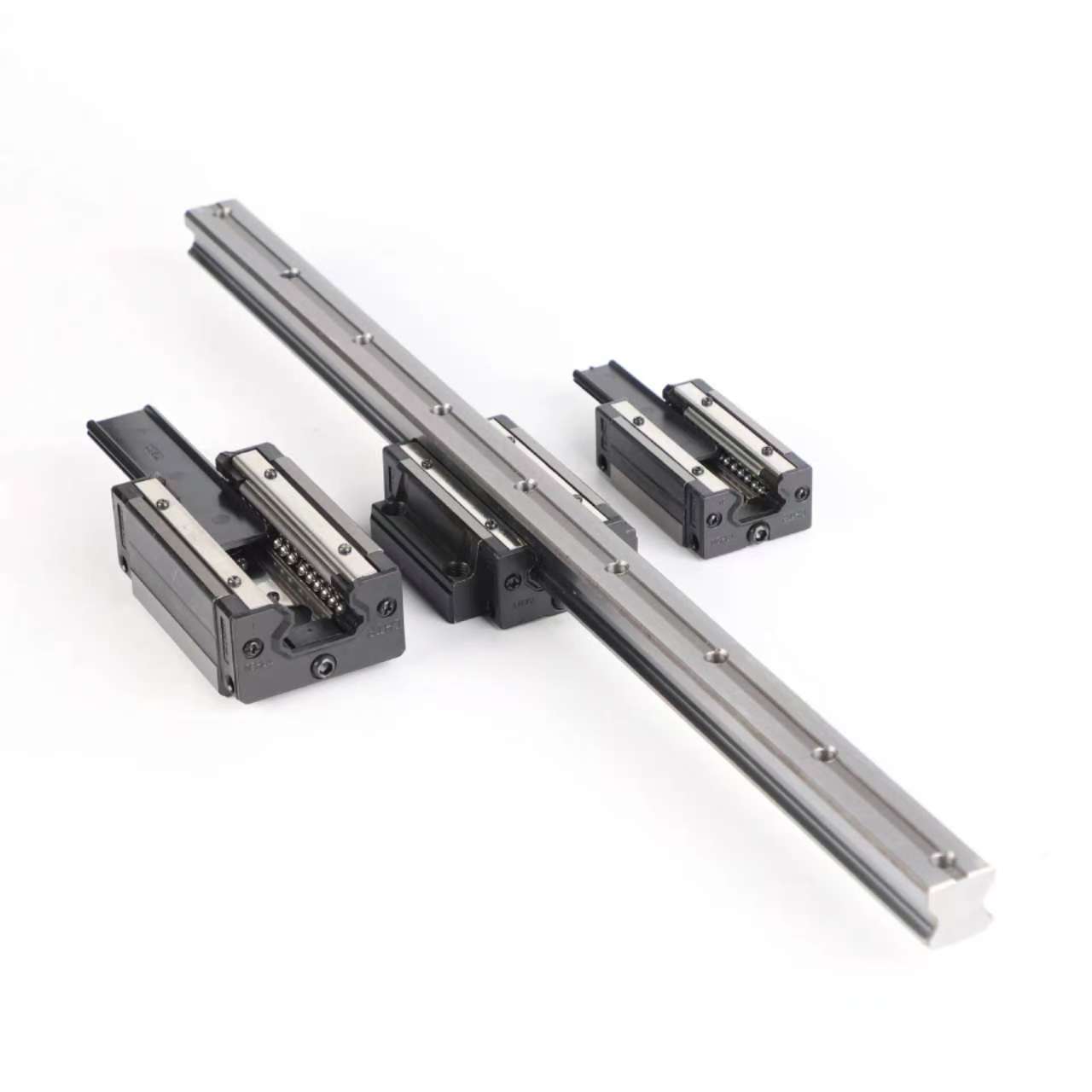
With the rapid development of intelligent manufacturing and precision machining, machine tool guideways are no longer simply "slide rails", but rather key carriers of precision, efficiency, and reliability. Their performance upgrades are propelling the manufacturing industry towards higher speeds, greater precision, and longer lifespans.
1. Guide rails ensure the core value of machine tools: machining accuracy, which is directly reflected in the workpiece in terms of straightness, parallelism, and positioning error. High-end guide rails can achieve micron-level or even sub-micron-level accuracy.
Enhance motion efficiency: Low-friction guide rails increase rapid traverse speeds by several times, reduce idle travel time, and enhance productivity.
Extending service life: Wear-resistant materials and proper lubrication maintain accuracy for a longer period, reducing failure rates and maintenance costs.
Reduce energy consumption: The less friction, the lower the driving power, the less heat generated, and the more energy-efficient.
II. Key Applications of Guide Rails in Various Industries
CNC Machine Tools: Guide rails are used for the worktables, tool holders, and spindle guidance of machining centers, lathes, and grinding machines, determining the precision and surface quality of parts.
3C and electronic manufacturing: High-speed and high-precision machining of mobile phone frames and precision structural components, with linear guide rails becoming a standard configuration.
Automotive and construction machinery: Efficient and reliable machining of engine blocks, transmission housings, and chassis components.
Aerospace: Titanium alloys, composite materials, and high-precision structural components rely on hydrostatic guideways and high-precision linear rails for ultra-precise machining.
Automation and Robotics: Linear guides are utilized for transplanting, positioning, and assembly, supporting the high-speed and stable operation of production lines.
III. Future Trends: High Precision, Long Lifespan, and Intelligence Current guideway technology is undergoing upgrades in three directions: Material upgrades: The application of high carbon steel, bearing steel, ceramics, and composite materials has significantly improved hardness and wear resistance.
Surface treatment: coating, quenching, precision scraping, grinding, reducing friction, and enhancing precision stability.
Intelligent lubrication and monitoring: Online wear monitoring, automatic lubrication, and lifespan prediction, enabling predictive maintenance.